Showing posts with label justin bieber. Show all posts

Sunday, February 24, 2013

Music News : Justin Bieber, Drake To 'Blast Up' Next Single 'Right Here'

Music News : ustin Bieber, Drake To 'Blast Up' Next Single 'Right Here':

Music News : Justin Bieber, Drake To 'Blast Up' Next Single 'Right Here'

The Juno-nominated singer will drop the Believe track Tuesday.
By Jocelyn Vena
Drake and Justin BieberPhoto: Jag Gundu/ Getty Images


CELEBRITY NEWS
FREE MUSIC - PALCO MP3

Music News : Justin Bieber, Taylor Swift, One Direction And Adele Among 'Music's Top 40 Money Makers'

Music News : Justin Bieber, Taylor Swift, One Direction And Adele Among 'Music's Top 40 Money Makers':

Music News : Justin Bieber, Taylor Swift, One Direction And Adele Among 'Music's Top 40 Money Makers'

Top 20 on Billboard list also includes Carrie Underwood, Coldplay and #1 Madonna.
By Gil Kaufman
Justin Bieber
Photo: Alexander Tamargo/ Getty Images


CELEBRITY NEWS
FREE MUSIC - PALCO MP3

Tuesday, February 12, 2013

Justin Bieber Releases New Song After Failed Live Stream

Justin Bieber Releases New Song After Failed Live Stream:

Justin Bieber Releases New Song After Failed Live Stream

Justin Bieber is shirtless in this brand new video uploaded to Telly just for his fans!
Earlier this evening, the 18-year-old entertainer attempted to go live on both TwitCam and UStream during the 2013 Grammy Awards, but unfortunately the sites crashed from too many viewers.
As an apology to his fans for not being able to chat with them live, Justin recorded a short video and played an unreleased new song!
UPDATE: Justin also uploaded a clearer version of “You Want Me” to SoundCloud!
Justin‘s adorable younger siblings Jazmyn and Jaxon also make a quick cameo towards the end of the video – check it out:


Justin Bieber – “Sorry”


CELEBRITY NEWS
FREE MUSIC - PALCO MP3

Justin Bieber: 'You Want Me' - Listen Now to New Song!

Justin Bieber: 'You Want Me' - Listen Now to New Song!:

Justin Bieber: 'You Want Me' - Listen Now to New Song!
 

Justin Bieber was quite the busy guy during the 2013 Grammy Awards even though he was not at the show!
The 18-year-old singer, who received no nominations this year, planned on hosting a live stream with his fans during the show, but the site crashed and it wasn’t able to happen.
As an apology to his fans, Justin posted a video in which he played his new song “You Want Me”! He then released the song separately on SoundCloud. Check it out below!
“its not finished but heres a little part a song I’m working on,” Justin tweeted.
WHAT DO YOU THINK of Justin Bieber’s new song “You Want Me”?


CELEBRITY NEWS
FREE MUSIC - PALCO MP3

Justin Bieber: 'Saturday Night Live' Sketch Recap!

Justin Bieber: 'Saturday Night Live' Sketch Recap!:

Justin Bieber: 'Saturday Night Live' Sketch Recap!
 
Justin Bieber wishes you a very sexy Valentine’s Day in this romantic sketch from last night’s Saturday Night Live.
The 18-year-old singer got chocolates and flowers for the big occasion, which seemed to be constantly ruined by his strange buddy Taco.
PHOTOS: Check out the latest pics of Justin Bieber
“This Valentine’s Day is going to be me, you, passion…” Justin said, before being interrupted by a bird flying into the window.
Watch Justin‘s dreamy (and funny!) V-day sketch below!


Justin Bieber – Valentine’s Day Message
Click inside to watch all of his sketches and performances from the episode…


Opening Monologue


Protective Brother


Principal Frye


The Miley Cyrus Show


50s Romance


“Nothing Like Us” performance


The Californians


“As Long As You Love Me” performance
  

CELEBRITY NEWS
FREE MUSIC - PALCO MP3

Justin Bieber Hosts Live Stream - WATCH NOW

Justin Bieber Hosts Live Stream - WATCH NOW:

Justin Bieber Hosts Live Stream - WATCH NOW
 
Justin Bieber is hosting an hour long live video stream for his fans right NOW!
“I’m gonna do an hour live video stream tomorrow at 8 est,” the 18-year-old entertainer posted on Twitter after hosting Saturday Night Live.
“I’m gonna play some new music and answer questions,” Justin continued while suggesting his fans help spread the word.
Be sure to check out Justin‘s live stream to see his performances and fan Q&A over on TwitCam:
UPDATE: Looks like the Beliebers flocked to TwitCam and, unfortunately, crashed it!


CELEBRITY NEWS
FREE MUSIC - PALCO MP3

Justin Bieber Goes Shirtless While Releasing New Song

Justin Bieber Goes Shirtless While Releasing New Song:

Justin Bieber Goes Shirtless While Releasing New Song
 
Justin Bieber is shirtless in this brand new video uploaded to Telly just for his fans!
Earlier this evening, the 18-year-old entertainer tried to host live streams on both TwitCam and UStream, but unfortunately the sites crashed due to too many viewers!
As an apology to his fans for not being able to chat with them live, Justin recorded a short video and played an unreleased new song!
UPDATE: Justin also uploaded a clearer version of “You Want Me” to SoundCloud!
Justin‘s adorable younger siblings Jazmyn and Jaxon also make a quick cameo towards the end of the video – check it out:


Justin Bieber – “Sorry”


CELEBRITY NEWS
FREE MUSIC - PALCO MP3

Justin Bieber: 'You Want Me' - Listen Now!

Justin Bieber: 'You Want Me' - Listen Now!:

Justin Bieber: 'You Want Me' - Listen Now!
 
Check out this brand new unreleased song that Justin Bieber uploaded to SoundCloud earlier tonight (February 10)!
The 18-year-old entertainer originally played the song in a video he recorded for his fans, before uploading the higher quality full length version.
PHOTOS: Check out the latest pics of Justin Bieber
“its not finished but heres a little part a song I’m working on,” Justin explained on Twitter with a link to the song.
WHAT DO YOU THINK of Justin Bieber’s new song “You Want Me”?


CELEBRITY NEWS
FREE MUSIC - PALCO MP3

Saturday, July 21, 2012

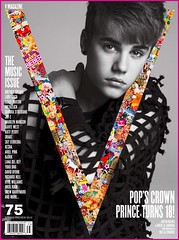
Justin-Bieber-V-Magazine-Cover

Justin-Bieber-V-Magazine-Cover:
Victoria´s Secret Show & Victoria`s Secret Fashio posted a photo:

Justin-Bieber-V-Magazine-Cover

Justin Bieber Biography


Born March 1, 1994 (1994-03-01) (age 16)

Origin Stratford, Ontario, Canada

Genres Pop, R&B

Occupations Singer, songwriter

Instruments Vocals, guitar, piano, percussion, trumpet

Years active 2007- present

Labels Island, RBMG

Associated acts Usher

Justin Bieber Website www.justinbiebermusic.com

http://justin-bieber-images-google-news.blogspot.com/p/justin-bieber-baby-justin-bieber-2012-v.html

Justin Bieber ( born March 1, 1994) is a Canadian pop/R&B singer. His performances on YouTube were seen by Scooter Braun, who later became his manager. Braun arranged for him to meet with Usher in Atlanta, Georgia, and Bieber was soon signed to Raymond Braun Media Group (RBMG), a joint venture between Braun and Usher, and then to a recording contract with Island Records offered by L.A. Reid.


His debut single, "One Time", was released worldwide during 2009, and charted within the top thirty in over ten countries. It was followed by his debut release, My World on November 17, 2009, which was certified platinum in the United States, which at the time gave Bieber the highest debut by a new artist in the year, and made Bieber the first artist to have seven songs from a debut album chart on Billboard's Hot 100 chart. His first full studio release, My World 2.0 was released on March 23, 2010, debuting at number one and within the top ten of several countries. It was preceded by the international hit song, "Baby".


Contents

1 Early life

2 Career

3 Image

3.1 Crowd control problems

4 Discography

4.1 Albums

5 Tours

5.1 Opening act

6 Filmography

7 Awards and nominations


==Early life==

Bieber was born on March 1, 1994 in Stratford, Ontario. Bieber's mother, Pattie Mallette, was 18 years old when she became pregnant with her son. Bieber was raised as an only child by Mallette, who worked low-paying office jobs, though Bieber maintains contact with his father. As he grew, Bieber taught himself to play the piano, drums, guitar, and trumpet. In late 2007, when he was twelve, Bieber sang Ne-Yo's "So Sick" for a local singing competition in Stratford and placed second. Mallette posted a video of the performance on YouTube for their family and friends to see. She continued to upload videos of Bieber singing covers of various R&B songs, and Bieber's popularity on the site grew.


While searching for videos of a different singer, Scooter Braun, a former marketing executive of So So Def, clicked on one of Bieber's videos by accident. Impressed, Braun tracked down the theater Bieber was performing in, located Bieber's school, and finally contacted Mallette. Mallette was reluctant; she remembered praying, "God, I gave him to you. You could send me a Christian man, a Christian label!" However, after praying with her church elders and receiving their encouragement, she permitted Braun to fly Bieber, then 13, to Atlanta, Georgia to record demo tapes.


A week after arriving, Bieber sang for R&B singer/songwriter Usher, who arranged an audition with Antonio L.A. Reid at Island Records, who in turn signed him to Island Records in October 2008. Justin Timberlake was reportedly in the running to sign Bieber, but he eventually signed with Usher. Bieber and his mother then moved to Atlanta, also the home of Usher and Braun, to base his career.


==Career==

Bieber's first single, "One Time", was released to radio while Bieber was still recording his debut album. The song reached number 12 on the Canadian Hot 100 during its first week of release in July 2009, and later peaked at number 17 on the Billboard Hot 100. During fall 2009 it had success in international markets. The song was certified Platinum in Canada and the U.S. and Gold in the Australia and New Zealand. Bieber's first album My World, was released on November 17, 2009. Three consecutive singles, "One Less Lonely Girl", "Love Me", and "Favorite Girl", were released exclusively on the iTunes store and charted within the top forty of the Billboard Hot 100. The previous[clarification needed] was also released to radio and peaked within the top fifteen in the Canada and the U.S., being certified Gold in the latter. My World was eventually certified Platinum in the U.S. and Canada and Silver in the UK. To promote the album, Bieber performed in several live shows such as mtvU's VMA 09 Tour, European program The Dome, YTV's The Next Star and The Today Show, The Wendy Williams Show, Lopez Tonight, The Ellen DeGeneres Show, It's On with Alexa Chung, Good Morning America, Chelsea Lately, and BET's 106 & Park with Rihanna. Bieber also guest starred in an episode of True Jackson, VP in late 2009.


Bieber performed Stevie Wonder's "Someday at Christmas" for U.S. President Barack Obama and first lady Michelle Obama at the White House for Christmas in Washington, which was broadcast on December 20, 2009 on USA television broadcaster TNT. Bieber was also one of the performers at Dick Clark's New Year's Rockin' Eve with Ryan Seacrest on December 31. Bieber was a presenter at the 52nd Grammy Awards on January 31, 2010. He was invited to be a vocalist for the remake of We Are The World for its 25th anniversary to benefit Haiti after the earthquake. Bieber sings the opening line, which was sung by Lionel Richie in the original version. On March 12, 2010, a version of K'naan's "Wavin' Flag" recorded by a collective of Canadian musicians known as Young Artists for Haiti was released. Bieber is featured in the song, performing the closing lines.


"Baby", the lead single from the second half of his debut album, which features Ludacris, was released in January 2010 and became his biggest hit thus far, charting at number five in the U.S. and reaching the top ten in seven other countries. Two digital singles, "Never Let You Go", and "U Smile" were top thirty hits on the U.S. Hot 100, and top twenty hits in Canada. According to review aggregator Metacritic, the album has received "generally favorable reviews". It debuted at number one on the U.S. Billboard 200, making Bieber the youngest solo male act to top the chart since Stevie Wonder in 1963. My World 2.0 also debuted at number one on the Canadian Albums Chart, Irish Albums Chart, and Australian Albums Chart, and the New Zealand Albums Chart and reached the top ten of fifteen other countries. To promote the album, Bieber appeared on several live programs including The View, the 2010 Kids Choice Awards, Nightline, The Late Show with David Letterman, The Dome and 106 and Park. On April 10, 2010, Bieber was the musical guest on Saturday Night Live.


Bieber will begin recording his next release in Summer 2010 in New York City.[32] British singer and songwriter Taio Cruz has confirmed he is writing on Bieber's next project.


Bieber's voice is now deeper than it was when he recorded his albums because of puberty. The singer discussing his vocals remarked, "It cracks. Like every teenage boy, I'm dealing with it and I have the best vocal coach in the world. Some of the notes I hit on "Baby" I can't hit anymore. We have to lower the key when I sing live."


==Image==

According to Jan Hoffman of The New York Times, part of Bieber's appeal stems from his YouTube channel. In contrast to singers whose careers were launched by high profile franchises like American Idol or the Disney Channel, "Justin, his fans passionately believe, is homemade. Long before he released his EP, My World, in mid-November, the YouTube videos attracted millions of views." Braun recognized the appeal. Prior to flying him to Atlanta, Braun wanted to "build him up more on YouTube first" and had Bieber record more home videos for the channel. "I said: ‘Justin, sing like there’s no one in the room. But let’s not use expensive cameras.’ We’ll give it to kids, let them do the work, so that they feel like it’s theirs," recalled Braun. Bieber continues to upload videos to the same channel and has opened a Twitter account, from which he interacts with fans regularly. The accounts also serve marketing purposes; for example, Bieber's music video for "One Time" only began selling quickly after it was uploaded to YouTube.


Usher comments that while he and Bieber were both signed at the same time, "I had the chance to ramp up my success, where this has happened to Bieber abruptly." As a result, Usher, Braun, Bieber's bodyguard, Kenny, and other adults surrounding Bieber constantly coach him on handling fame and his public image. After signing Bieber, Usher appointed one of his former assistants, Ryan Good, to be Bieber's road manager and stylist. Good, nicknamed Bieber's "swagger coach", helped develop Bieber's public image. Good created a "streetwise look" for the singer which consisted of baseball caps, hoodies, dog chains and flashy sneakers. Amy Kaufman of The Los Angeles Times comments, "Though a product of a middle-class suburban upbringing in Stratford, Ontario, Bieber's manner of dress and speech ("Wassup man, how you doin'?" or "It's like, you know, whateva' ") suggest he's mimicking his favorite rappers."


Bieber is often featured in teen magazines such as Tiger Beat, and has been labeled a "teen hearthrob".


==Crowd control problems==

Thousands of screaming fans showed up at a US mall to see Bieber on November 27, 2009 Bieber's popularity has caused safety concerns. While promoting My World, Bieber was scheduled to appear at Long Island's Roosevelt Field Mall, but the performance had to be cancelled. Over 3,000 screaming fans showed up for the appearance. The event got out of control, and over 35 units from the Nassau County and Garden City police departments had to be called in. Several fans received minor injuries. The police arrested an Island Records senior vice-president, James A. Roppo, reportedly for hindering the police's crowd control efforts by not sending a timely message on Twitter as instructed by the police. James Roppo pleaded not guilty to all charges. On March 24, 2010 Bieber's manager, Scooter Braun, was arrested on one count of second-degree reckless endangerment and one count of second-degree criminal nuisance related to the incident. Braun pleaded not guilty to both charges and was later released.


On April 27, 2010, a scheduled promotional performance was cancelled by Australian police after several girls were injured in a crowd crush. Bieber was scheduled to sing three songs for the Channel Seven program, Sunrise. An estimated 4,000 pre-teen girls showed up at 3:00am and stormed past safety barricades. In addition to those injured, dozens were treated for hyperventilation. In a Twitter message after the incident, Bieber said: "I want to make this clear... I don't cancel. Bieber's tweet continued, stating: I woke up this morning to the police canceling the show for safety reasons. I’m very happy about the welcome and the love from around the world, but I want everyone to still remember my fans safety comes first. At the end of the day I want you all to enjoy the music."


Arriving at Auckland airport in New Zealand later that day, RadioLIVE New Zealand reported on airport security's efforts to keep Bieber out of trouble. He later tweeted that somebody stole his hat and "knocked down mama." The teenage girl who stole the hat then uploaded a video to the Internet, outlining the demands of her extortion attempt. The next day, she returned the hat amid speculation of possible criminal charges.


==Discography==

Main article: Justin Bieber discography

Albums

2009: My World

2010: My World 2.0

Tours

2009: Urban Behavior Tour

2010: My World Tour

Opening act

2009: Fearless Tour (United Kingdom)

Filmography

Year Title Role Notes

2009 True Jackson, VP Himself Guest star

2010 Silent Library

School Gyrls Cameo

Saturday Night Live Guest star/performer Ep 35.18


==Awards and nominations==

Myx Music Awards (Philippines)

Favorite International Video "One Time"

Juno Awards

2010, Album of the Year, My World Nominated

2010, Pop Album of the Year, My World Nominated

2010, New Artist of the Year Nominated

TRL Awards (Italy)

2010, Best International Act Nominated

CELEBRITY NEWS
FREE MUSIC - PALCO MP3

Sunday, April 22, 2012

FREE MUSIC - MP3 DOWNLOAD - DOWNLOAD MUSIC LEGALLY - JUSTIN BIEBER PICTURES and BIOGRAPHY

FREE MUSIC - MP3 DOWNLOAD - DOWNLOAD MUSIC LEGALLY - JUSTIN BIEBER PICTURES and BIOGRAPHY

Posted By Palco MP3
http://palcomp3.com/nelioguerson/


Someday, baby, baby justin bieber, justin bieber lyrics, selena gomez, justin bieber youtube, justin bieber facebook, video justin bieber, justin bieber 2012, one time, never say never, justin bieber, justin bieber mistletoe,
baby, baby justin bieber, justin bieber lyrics, selena gomez, justin bieber youtube, justin bieber facebook, video justin bieber, justin bieber 2011, one time, never say never, justin bieber,
Categories : free music, download music, youtube music, youtube, music video, music lyrics, lyrics, sheet music, mp3, music mp3,ipod, itunes, yahoo music, myspace music, myspace, 4shared music,

MP3 DOWNLOAD - FREE MUSIC - DOWNLOAD MUSIC - FREE MP3 :
Free music mp3 download download music on Palco MP3
mp3 download - free music - download music

Listen to the music mp3 and download songs at Palco MP3 directly from artist


MP3

MPEG-1 Audio Layer 3 Filename extension .mp3
Internet media type audio/mpeg, audio/MPA, audio/mpa-robust
Type of format Audio
Standard(s) ISO/IEC 11172-3, ISO/IEC 13818-3
MPEG-1 Audio Layer 3, more commonly referred to as MP3, is a patented digital audio encoding format using a form of lossy data compression. It is a common audio format for consumer audio storage, as well as a de facto standard of digital audio compression for the transfer and playback of music on digital audio players.

MP3 is an audio-specific format that was designed by the Moving Picture Experts Group as part of its MPEG-1 standard. The group was formed by several teams of engineers at Fraunhofer IIS in Erlangen, Germany, AT&T-Bell Labs (now a division of Alcatel-Lucent) in Murray Hill, NJ, USA, Thomson-Brandt, and CCETT as well as others. It was approved as an ISO/IEC standard in 1991.

The use in MP3 of a lossy compression algorithm is designed to greatly reduce the amount of data required to represent the audio recording and still sound like a faithful reproduction of the original uncompressed audio for most listeners. An MP3 file that is created using the setting of 128 kbit/s will result in a file that is about 1/11th the size of the CD file created from the original audio source. An MP3 file can also be constructed at higher or lower bit rates, with higher or lower resulting quality.

The compression works by reducing accuracy of certain parts of sound that are deemed beyond the auditory resolution ability of most people. This method is commonly referred to as perceptual coding. It internally provides a representation of sound within a short-term time/frequency analysis window, by using psychoacoustic models to discard or reduce precision of components less audible to human hearing, and recording the remaining information in an efficient manner.

This technique is often presented as relatively conceptually similar to the principles used by JPEG, an image compression format. The specific algorithms, however, are rather different: JPEG uses a built-in vision model that is very widely tuned (as is necessary for images), while MP3 uses a complex, precise masking model that is much more signal dependent.


==Development==
The MP3 lossy audio data compression algorithm takes advantage of a perceptual limitation of human hearing called auditory masking. In 1894, Alfred Marshall Mayer reported that a tone could be rendered inaudible by another tone of lower frequency. In 1959, Richard Ehmer described a complete set of auditory curves regarding this phenomenon. Ernst Terhardt et al. created an algorithm describing auditory masking with high accuracy. This work added on a variety of reports from authors dating back to Fletcher, and to the work that initially determined critical ratios and critical bandwidths.

The psychoacoustic masking codec was first proposed in 1979, apparently independently, by Manfred R. Schroeder, et al. from AT&T-Bell Labs in Murray Hill, NJ, and M. A. Krasner both in the United States. Krasner was the first to publish and to produce hardware for speech, not usable as music bit compression, but the publication of his results as a relatively obscure Lincoln Laboratory Technical Report did not immediately influence the mainstream of psychoacoustic codec development. Manfred Schroeder was already a well-known and revered figure in the worldwide community of acoustical and electrical engineers, and his paper had influence in acoustic and source-coding (audio data compression) research. Both Krasner and Schroeder built upon the work performed by Eberhard F. Zwicker in the areas of tuning and masking of critical bands, that in turn built on the fundamental research in the area from Bell Labs of Harvey Fletcher and his collaborators. A wide variety of (mostly perceptual) audio compression algorithms were reported in IEEE's refereed Journal on Selected Areas in Communications. That journal reported in February 1988 on a wide range of established, working audio bit compression technologies, some of them using auditory masking as part of their fundamental design, and several showing real-time hardware implementations.

The immediate predecessors of MP3 were "Optimum Coding in the Frequency Domain" (OCF), and Perceptual Transform Coding (PXFM). These two codecs, along with block-switching contributions from Thomson-Brandt, were merged into a codec called ASPEC, which was submitted to MPEG, and which won the quality competition, but that was mistakenly rejected as too complex to implement. The first practical implementation of an audio perceptual coder (OCF) in hardware (Krasner's hardware was too cumbersome and slow for practical use), was an implementation of a psychoacoustic transform coder based on Motorola 56000 DSP chips.

MP3 is directly descended from OCF and PXFM. MP3 represents the outcome of the collaboration of Dr. Karlheinz Brandenburg, working as a postdoc at AT&T-Bell Labs with Mr. James D. Johnston of AT&T-Bell Labs, collaborating with the Fraunhofer Society for Integrated Circuits, Erlangen, with relatively minor contributions from the MP2 branch of psychoacoustic sub-band coders.

MPEG-1 Audio Layer 2 encoding began as the Digital Audio Broadcast (DAB) project managed by Egon Meier-Engelen of the Deutsche Forschungs- und Versuchsanstalt fĂĽr Luft- und Raumfahrt (later on called Deutsches Zentrum fĂĽr Luft- und Raumfahrt, German Aerospace Center) in Germany. The European Community financed this project, commonly known as EU-147, from 1987 to 1994 as a part of the EUREKA research program.

As a doctoral student at Germany's University of Erlangen-Nuremberg, Karlheinz Brandenburg began working on digital music compression in the early 1980s, focusing on how people perceive music. He completed his doctoral work in 1989 and became an assistant professor at Erlangen-Nuremberg. While there, he continued to work on music compression with scientists at the Fraunhofer Society (in 1993 he joined the staff of the Fraunhofer Institute).

In 1991 there were two proposals available: Musicam and ASPEC (Adaptive Spectral Perceptual Entropy Coding). The Musicam technique, as proposed by Philips (The Netherlands), CCETT (France) and Institut fĂĽr Rundfunktechnik (Germany) was chosen due to its simplicity and error robustness, as well as its low computational power associated with the encoding of high quality compressed audio. The Musicam format, based on sub-band coding, was the basis of the MPEG Audio compression format (sampling rates, structure of frames, headers, number of samples per frame).

Much of its technology and ideas were incorporated into the definition of ISO MPEG Audio Layer I and Layer II and the filter bank alone into Layer III (MP3) format as part of the computationally inefficient hybrid filter bank. Under the chairmanship of Professor Musmann (University of Hannover) the editing of the standard was made under the responsibilities of Leon van de Kerkhof (Layer I) and Gerhard Stoll (Layer II).

A working group consisting of Leon van de Kerkhof (The Netherlands), Gerhard Stoll (Germany), Leonardo Chiariglione (Italy), Yves-François Dehery (France), Karlheinz Brandenburg (Germany) and James D. Johnston (USA) took ideas from ASPEC, integrated the filter bank from Layer 2, added some of their own ideas and created MP3, which was designed to achieve the same quality at 128 kbit/s as MP2 at 192 kbit/s.

All algorithms were approved in 1991 and finalized in 1992 as part of MPEG-1, the first standard suite by MPEG, which resulted in the international standard ISO/IEC 11172-3, published in 1993. Further work on MPEG audio was finalized in 1994 as part of the second suite of MPEG standards, MPEG-2, more formally known as international standard ISO/IEC 13818-3, originally published in 1995. There is also MPEG-2.5 audio, a proprietary unofficial extension developed by Fraunhofer IIS. It enables MP3 to work satisfactorily at very low bitrates and added lower sampling frequencies.

Compression efficiency of encoders is typically defined by the bit rate, because compression ratio depends on the bit depth and sampling rate of the input signal. Nevertheless, compression ratios are often published. They may use the Compact Disc (CD) parameters as references (44.1 kHz, 2 channels at 16 bits per channel or 2×16 bit), or sometimes the Digital Audio Tape (DAT) SP parameters (48 kHz, 2×16 bit). Compression ratios with this latter reference are higher, which demonstrates the problem with use of the term compression ratio for lossy encoders.

Karlheinz Brandenburg used a CD recording of Suzanne Vega's song "Tom's Diner" to assess and refine the MP3 compression algorithm. This song was chosen because of its nearly monophonic nature and wide spectral content, making it easier to hear imperfections in the compression format during playbacks. Some jokingly refer to Suzanne Vega as "The mother of MP3". Some more critical audio excerpts (glockenspiel, triangle, accordion, etc.) were taken from the EBU V3/SQAM reference compact disc and have been used by professional sound engineers to assess the subjective quality of the MPEG Audio formats. This particular track has an interesting property in that the two channels are almost, but not completely, the same, leading to a case where Binaural Masking Level Depression causes spatial unmasking of noise artifacts unless the encoder properly recognizes the situation and applies corrections similar to those detailed in the MPEG-2 AAC psychoacoustic model.

==Going public==
A reference simulation software implementation, written in the C language and known as ISO 11172-5, was developed by the members of the ISO MPEG Audio committee in order to produce bit compliant MPEG Audio files (Layer 1, Layer 2, Layer 3). Working in non-real time on a number of operating systems, it was able to demonstrate the first real time hardware decoding (DSP based) of compressed audio. Some other real time implementation of MPEG Audio encoders were available for the purpose of digital broadcasting (radio DAB, television DVB) towards consumer receivers and set top boxes.

Later, on July 7, 1994, the Fraunhofer Society released the first software MP3 encoder called l3enc. The filename extension .mp3 was chosen by the Fraunhofer team on July 14, 1995 (previously, the files had been named .bit). With the first real-time software MP3 player Winplay3 (released September 9, 1995) many people were able to encode and play back MP3 files on their PCs. Because of the relatively small hard drives back in that time (~ 500 MB) lossy compression was essential to store non-instrument based (see tracker and MIDI) music for playback on computer.

==Internet==
From the first half of 1994 through the late 1990s, MP3 files began to spread on the Internet. The popularity of MP3s began to rise rapidly with the advent of Nullsoft's audio player Winamp (released in 1997), and the Unix audio player mpg123. In 1998, the Rio PMP300, one of the first portable MP3 players was released, despite legal suppression efforts by the RIAA.

In November 1997, the website mp3.com was offering thousands of MP3s created by independent artists for free. The small size of MP3 files enabled widespread peer-to-peer file sharing of music ripped from CDs, which would have previously been nearly impossible. The first large peer-to-peer filesharing network, Napster, was launched in 1999.

The ease of creating and sharing MP3s resulted in widespread copyright infringement. Major record companies argue that this free sharing of music reduces sales, and call it "music piracy". They reacted by pursuing lawsuits against Napster (which was eventually shut down and later sold) and against individual users who engaged in file sharing.

Despite the popularity of the MP3 format, online music retailers often use other proprietary formats that are encrypted or obfuscated in order to make it difficult to use purchased music files in ways not specifically authorized by the record companies. Attempting to control the use of files in this way is known as Digital Rights Management. Record companies argue that this is necessary to prevent the files from being made available on peer-to-peer file sharing networks. This has other side effects, though, such as preventing users from playing back their purchased music on different types of devices. However, the audio content of these files can usually be converted into an unencrypted format. For instance, users are often allowed to burn files to audio CD, which requires conversion to an unencrypted audio format.

Unauthorized MP3 file sharing continues on next-generation peer-to-peer networks. Some authorized services, such as Beatport, Bleep, Juno Records, eMusic, Zune Marketplace, Walmart.com, and Amazon.com sell unrestricted music in the MP3 format.

==Encoding audio==
The MPEG-1 standard does not include a precise specification for an MP3 encoder, but does provide example psychoacoustic models, rate loop, and the like in the non-normative part of the original standard. At the present, these suggested implementations are quite dated. Implementers of the standard were supposed to devise their own algorithms suitable for removing parts of the information from the audio input. As a result, there are many different MP3 encoders available, each producing files of differing quality. Comparisons are widely available, so it is easy for a prospective user of an encoder to research the best choice. It must be kept in mind that an encoder that is proficient at encoding at higher bit rates (such as LAME) is not necessarily as good at lower bit rates.

During encoding, 576 time-domain samples are taken and are transformed to 576 frequency-domain samples. If there is a transient, 192 samples are taken instead of 576. This is done to limit the temporal spread of quantization noise accompanying the transient. (See psychoacoustics.)

==Decoding audio==
Decoding, on the other hand, is carefully defined in the standard. Most decoders are "bitstream compliant", which means that the decompressed output - that they produce from a given MP3 file - will be the same, within a specified degree of rounding tolerance, as the output specified mathematically in the ISO/IEC standard document (ISO/IEC 11172-3). Therefore, comparison of decoders is usually based on how computationally efficient they are (i.e., how much memory or CPU time they use in the decoding process).

==Audio quality==
When performing lossy audio encoding, such as creating an MP3 file, there is a trade-off between the amount of space used and the sound quality of the result. Typically, the creator is allowed to set a bit rate, which specifies how many kilobits the file may use per second of audio. Using a lower bit rate provides a relatively lower audio quality and produces a smaller file size. Likewise, using a higher bit rate outputs a higher quality audio, but also results in a larger file.

Files encoded with a lower bit rate will generally play back at a lower quality. With too low a bit rate, compression artifacts (i.e. sounds that were not present in the original recording) may be audible in the reproduction. Some audio is hard to compress because of its randomness and sharp attacks. When this type of audio is compressed, artifacts such as ringing or pre-echo are usually heard. A sample of applause compressed with a relatively low bit rate provides a good example of compression artifacts.

Besides the bit rate of an encoded piece of audio, the quality of MP3 files also depends on the quality of the encoder itself, and the difficulty of the signal being encoded. As the MP3 standard allows quite a bit of freedom with encoding algorithms, different encoders may feature quite different quality, even with identical bit rates. As an example, in a public listening test featuring two different MP3 encoders at about 128 kbit/s, one scored 3.66 on a 1–5 scale, while the other scored only 2.22.

Quality is dependent on the choice of encoder and encoding parameters. However, in 1998, MP3 at 128 kbit/s was providing quality only equivalent to AAC at 64 kbit/s and MP2 at 192 kbit/s.

The simplest type of MP3 file uses one bit rate for the entire file — this is known as Constant Bit Rate (CBR) encoding. Using a constant bit rate makes encoding simpler and faster. However, it is also possible to create files where the bit rate changes throughout the file. These are known as Variable Bit Rate (VBR) files. The idea behind this is that, in any piece of audio, some parts will be much easier to compress, such as silence or music containing only a few instruments, while others will be more difficult to compress. So, the overall quality of the file may be increased by using a lower bit rate for the less complex passages and a higher one for the more complex parts. With some encoders, it is possible to specify a given quality, and the encoder will vary the bit rate accordingly. Users who know a particular "quality setting" that is transparent to their ears can use this value when encoding all of their music, and not need to worry about performing personal listening tests on each piece of music to determine the correct bit rate.

Perceived quality can be influenced by listening environment (ambient noise), listener attention, and listener training and in most cases by listener audio equipment (such as sound cards, speakers and headphones).

A test given to new students by Stanford University Music Professor Jonathan Berger showed that student preference for MP3 quality music has risen each year. Berger said the students seem to prefer the 'sizzle' sounds that MP3s bring to music. Others have reached the same conclusion, and some record producers have begun to mix music specifically to be heard on iPods and mobile phones.

==Bit rate==
Several bit rates are specified in the MPEG-1 Audio Layer III standard: 32, 40, 48, 56, 64, 80, 96, 112, 128, 160, 192, 224, 256 and 320 kbit/s, and the available sampling frequencies are 32, 44.1 and 48 kHz.[21] Additional extensions were defined in MPEG-2 Audio Layer III: bit rates 8, 16, 24, 32, 40, 48, 56, 64, 80, 96, 112, 128, 144, 160 kbit/s and sampling frequencies 16, 22.05 and 24 kHz.

A sample rate of 44.1 kHz is almost always used, because this is also used for CD audio, the main source used for creating MP3 files. A greater variety of bit rates are used on the Internet. 128 kbit/s is the most common, offering adequate audio quality in a relatively small space. As Internet bandwidth availability and hard drive sizes have increased, higher bit rates like 160 and 192 kbit/s have increased in popularity.

Uncompressed audio as stored on an audio-CD has a bit rate of 1,411.2 kbit/s, so the bitrates 128, 160 and 192 kbit/s represent compression ratios of approximately 11:1, 9:1 and 7:1 respectively.

Non-standard bit rates up to 640 kbit/s can be achieved with the LAME encoder and the freeformat option, although few MP3 players can play those files. According to the ISO standard, decoders are only required to be able to decode streams up to 320 kbit/s.

==VBR==
MPEG audio may use variable bitrate (VBR). Layer III can use bitrate switching and bit reservoir. Variable bitrate is used when the goal is to achieve a fixed level of quality. The final file size of a VBR encoding is less predictable than with constant bitrate. Average bitrate is a compromise between the two - the bitrate is allowed to vary for more consistent quality, but is controlled to remain near an average value chosen by the user, for predictable file sizes. Although technically an MP3 decoder must support VBR to be standards compliant, historically some decoders have bugs with VBR decoding, particularly before VBR encoders became widespread.

==File structure==

An MP3 file is made up of multiple MP3 frames, which consist of a header and a data block. This sequence of frames is called an elementary stream. Frames are not independent items ("byte reservoir") and therefore cannot be extracted on arbitrary frame boundaries. The MP3 Data blocks contain the (compressed) audio information in terms of frequencies and amplitudes. The diagram shows that the MP3 Header consists of a sync word, which is used to identify the beginning of a valid frame. This is followed by a bit indicating that this is the MPEG standard and two bits that indicate that layer 3 is used; hence MPEG-1 Audio Layer 3 or MP3. After this, the values will differ, depending on the MP3 file. ISO/IEC 11172-3 defines the range of values for each section of the header along with the specification of the header. Most MP3 files today contain ID3 metadata, which precedes or follows the MP3 frames; as noted in the diagram.

==Design limitations==
 This section does not cite any references or sources.
Please help improve this article by adding citations to reliable sources. Unsourced material may be challenged and removed. (July 2008)

There are several limitations inherent to the MP3 format that cannot be overcome by any MP3 encoder. Newer audio compression formats such as Vorbis, WMA Pro and AAC no longer have these limitations. In technical terms, MP3 is limited in the following ways:

Time resolution can be too low for highly transient signals and may cause smearing of percussive sounds.
Due to the tree structure of the filter bank, pre-echo problems are made worse, as the combined impulse response of the two filter banks does not, and cannot, provide an optimum solution in time/frequency resolution.
The combining of the two filter banks' outputs creates aliasing problems that must be handled partially by the "aliasing compensation" stage; however, that creates excess energy to be coded in the frequency domain, thereby decreasing coding efficiency.
Frequency resolution is limited by the small long block window size, which decreases coding efficiency.
There is no scale factor band for frequencies above 15.5/15.8 kHz.
Joint stereo is done only on a frame-to-frame basis.
Internal handling of the bit reservoir increases encoding delay.
Encoder/decoder overall delay is not defined, which means there is no official provision for gapless playback. However, some encoders such as LAME can attach additional metadata that will allow players that can handle it to deliver seamless playback.
The data stream can contain an optional checksum, but the checksum only protects the header data, not the audio data.

==ID3 and other tags==
Main articles: ID3 and APEv2 tag
A "tag" in an audio file is a section of the file that contains metadata such as the title, artist, album, track number or other information about the file's contents.

As of 2006, the most widespread standard tag formats are ID3v1 and ID3v2, and the more recently introduced APEv2.

APEv2 was originally developed for the MPC file format. APEv2 can coexist with ID3 tags in the same file or it can be used by itself.

Tag editing functionality is often built into MP3 players and editors, but there also exist tag editors dedicated to the purpose.

==Volume normalization==
Since volume levels of different audio sources can vary greatly, it is sometimes desirable to adjust the playback volume of audio files such that a consistent average volume is perceived. The idea is to control the average volume across multiple files, not the volume peaks in a single file. This gain normalization, while similar in purpose, is distinct from dynamic range compression (DRC), which is a form of normalization used in audio mastering. Gain normalization may defeat the intent of recording artists and audio engineers who deliberately set the volume levels of the audio they recorded.

A few standards for storing the average volume of an MP3 file in its metadata tags, enabling a specially designed player to automatically adjust the overall playback volume for each file, have been proposed. A popular and widely implemented such proposal is "Replay Gain", which is not MP3-specific. When used in MP3s, it is stored differently by different encoders, and as of 2008, Replay Gain-aware players don't yet support all formats.

==Licensing and patent issues==
 This section may require cleanup to meet Wikipedia's quality standards. Please improve this section if you can. (November 2008)

Many organizations have claimed ownership of patents related to MP3 decoding or encoding. These claims have led to a number of legal threats and actions from a variety of sources, resulting in uncertainty about which patents must be licensed in order to create MP3 products without committing patent infringement in countries that allow software patents.

The various MP3-related patents expire on dates ranging from 2007 to 2017 in the U.S. The initial near-complete MPEG-1 standard (parts 1, 2 and 3) was publicly available in December 6, 1991 as ISO CD 11172. In the United States, patents cannot claim inventions that were already publicly disclosed by the inventor more than a year prior to the filing date, but for patents filed prior to June 8, 1995, submarine patents made it possible to extend the effective lifetime of a patent through application extensions. Patents filed for anything disclosed in ISO CD 11172 a year or more after its publication are questionable; if only the known MP3 patents filed by December 1992 are considered MP3 decoding, then MP3 may be patent free in the US by December of 2012.

Thomson Consumer Electronics claims to control MP3 licensing of the Layer 3 patents in many countries, including the United States, Japan, Canada and EU countries. Thomson has been actively enforcing these patents.

MP3 license revenues generated about €100 million for the Fraunhofer Society in 2005.

In September 1998, the Fraunhofer Institute sent a letter to several developers of MP3 software stating that a license was required to "distribute and/or sell decoders and/or encoders". The letter claimed that unlicensed products "infringe the patent rights of Fraunhofer and Thomson. To make, sell and/or distribute products using the [MPEG Layer-3] standard and thus our patents, you need to obtain a license under these patents from us."

However, there exist both free and/or proprietary alternatives, with free formats such as Vorbis, AAC, and others. Microsoft's usage of its own proprietary Windows Media format allows it to avoid licensing issues associated with these patents by avoiding usage of the MP3 format entirely. Until the key patents expire, unlicensed encoders and players could be infringing in countries where the patents are valid.

In spite of the patent restrictions, the perpetuation of the MP3 format continues. The reasons for this appear to be the network effects caused by:

familiarity with the format,
the large quantity of music now available in the MP3 format,
the wide variety of existing software and hardware that takes advantage of the file format,
the lack of DRM restrictions, which makes MP3 files easy to edit, copy and play in different portable digital players (Samsung, Apple, Creative, etc.),
the majority of home users not knowing or not caring about the patents' controversy and often not considering such legal issues when choosing their music format for personal use.
Additionally, patent holders declined to enforce license fees on free and open source decoders, which allows many free MP3 decoders to develop. Thus, while patent fees have been an issue for companies that attempt to use MP3, they have not meaningfully impacted users, which allows the format to grow in popularity.

Sisvel S.p.A. and its U.S. subsidiary Audio MPEG, Inc. previously sued Thomson for patent infringement on MP3 technology, but those disputes were resolved in November 2005 with Sisvel granting Thomson a license to their patents. Motorola also recently signed with Audio MPEG to license MP3-related patents.

In September 2006, German officials seized MP3 players from SanDisk's booth at the IFA show in Berlin after an Italian patents firm won an injunction on behalf of Sisvel against SanDisk in a dispute over licensing rights. The injunction was later reversed by a Berlin judge, but that reversal was in turn blocked the same day by another judge from the same court, "bringing the Patent Wild West to Germany" in the words of one commentator.

On February 16, 2007, Texas MP3 Technologies sued Apple, Samsung Electronics and Sandisk with a patent-infringement lawsuit regarding portable MP3 players. The suit was filed in Marshall, Texas; this is a common location for patent infringement suits due to the speed at which trials are conducted there.

Texas MP3 Technologies claimed infringement with U.S. patent 7,065,417, awarded in June 2006 to multimedia chip-maker SigmaTel, covering "an MPEG portable sound reproducing system and a method for reproducing sound data compressed using the MPEG method."

Alcatel-Lucent also claims ownership of several patents relating to MP3 encoding and compression, inherited from AT&T-Bell Labs. In November 2006 (prior to the companies' merger), Alcatel filed a lawsuit against Microsoft (see Alcatel-Lucent v. Microsoft), alleging infringement of seven of its patents. On February 23, 2007, a San Diego jury awarded Alcatel-Lucent a record-breaking US$1.52 billion in damages. The judge, however, reversed the jury verdict and ruled for Microsoft, and this ruling was upheld by the court of appeals. The appeals court actually ruled that Fraunhofer was a co-owner of one patent claimed to be owned by Alcatel-Lucent, due to work by James D. Johnston while Dr. Brandenburg worked at AT&T.

In short, with Thomson, Fraunhofer IIS, Sisvel (and its U.S. subsidiary Audio MPEG), Texas MP3 Technologies, and Alcatel-Lucent all claiming legal control of relevant MP3 patents related to decoders, the legal status of MP3 remains unclear in countries where those patents are valid.

==Security issues==
Microsoft Windows Media Format Runtime in Windows 2000, Windows XP, Windows Vista and Windows Server contained a coding error that permitted "remote code execution if a user opened a specially crafted media file". Such a file would allow the attacker to "then install programs; view, change, or delete data; or create new accounts with full user rights", if the account on which the file was played had administrator privileges. The problem was addressed in a critical update issued on September 8, 2009 (KB968816).

==Alternative technologies==
Main article: List of codecs
Many other lossy and lossless audio codecs exist. Among these, mp3PRO, AAC, and MP2 are all members of the same technological family as MP3 and depend on roughly similar psychoacoustic models. The Fraunhofer Gesellschaft owns many of the basic patents underlying these codecs as well, with others held by Dolby Labs, Sony, Thomson Consumer Electronics, and AT&T. In addition, there is also the open source file format Ogg Vorbis that has been available free of charge and without patent restrictions.

==See also==
Audio compression (data)
Comparison of audio codecs
Copyright infringement
Digital audio player
ID3
Joint stereo
LRC (file format)
Media player
MP3 blog
MP3 Surround
Streaming Media
DJ digital controller
AAC
Ogg Vorbis


Free Music & Music Download

A music download is the transferral of a song from an Internet-facing computer or website to a user's local computer. This term encompasses both legal downloads and downloads of copyright material without permission or payment.
Popular examples of online music stores that sell digital singles and albums include the iTunes Store, Napster, Zune Marketplace, Amazon MP3, Nokia Music Store, TuneTribe, Kazaa and eMusic. Paid downloads are sometimes encoded with Digital Rights Management that restricts making extra copies of the music or playing purchased songs on certain digital audio players. They are almost always compressed using a lossy codec (usually MPEG-1 Layer 3 or Windows Media), reducing file size and therefore bandwidth requirements.
However, this may cause an apparent loss in quality to a listener when compared to a CD, and cause compatibility issues with certain software and devices. Uncompressed files and losslessly compressed files are available at some sites.
As of 2006, digital music sales are estimated to have reached a trade value of approximately US$2 billion, with tracks available through 500 online services located in 40 countries, representing around 10 percent of the total global music market. Around the world in 2006, an estimated five billion songs, equating to 38,000 years in music, were swapped on peer-to-peer websites, while 509 million were purchased online. As of January 2011, Apple's iTunes Store alone saw $1.1 billion of revenue in fiscal Q1.

Music downloads offered by artists
Some artists allow their songs to be downloaded ( FREE ) directly from their websites. This is the case. So do it for free.

Challenges to legal music downloads
Even legal music downloads have faced a number of challenges from artists, record labels and the Recording Industry Association of America. In July 2007, the Universal Music Group decided not to renew their long-term contracts with iTunes. This legal challenge was primarily based upon the issue of pricing of songs, as Universal wanted to be able to charge more or less depending on the artist, a shift away from iTunes' standard 99 cents per song pricing. Many industry leaders feel that this is only the first of many show-downs between Apple Inc. and the various record labels.


CELEBRITY NEWS - DOWNLOAD MUSIC VIDEO LEGALLY

Sunday, February 26, 2012

Free Music & Music Download Plus Justin Bieber Wiki

Free Music & Music Download Plus Justin Bieber Wiki 

baby, baby justin bieber, justin bieber lyrics, justin bieber youtube, justin bieber facebook, video justin bieber, justin bieber 2012, one time, never say never, justin bieber,


Justin Bieber Wiki 

Birth name Justin Drew Bieber

Born March 4, 1994 (1994-03-04) (age 15)

Origin Stratford, Ontario, Canada

Genres Pop, R&B

Occupations Singer, songwriter

Instruments Vocals, guitar, piano, percussion, trumpet

Years active 2007-present

Labels Island, RBMG

Associated acts Usher

Justin Drew Bieber (IPA:  BEE-b?r; born March 4, 1994) is a Canadian pop/R&B singer. He was discovered on YouTube by Scooter Braun, who later became his manager. Braun flew Bieber to Atlanta, Georgia, to consult with Usher and soon signed a record deal with Island Records, where he began his professional career.

The first part of his two-part debut album My World was released on November 17, 2009. Four successful pre-album singles have been released: "One Time", "One Less Lonely Girl", "Love Me", and "Favorite Girl", which were Top 15 hits on the Canadian Hot 100 and Top 40 hits on the Billboard Hot 100. This accomplishment made Bieber the only artist in Billboard history to have four singles from a debut album chart in the Top 40 of the Hot 100 before the album's release. The album received positive reviews from critics, and debuted at #6 on the U.S. Billboard 200, selling 137,000 copies in its first week, which was the second best opening release for a new artist in 2009. Bieber also became the first artist to have all songs from a single album to chart in the U.S. Hot 100. It also debuted at #1 on the Canadian Albums Chart, and went Gold in a week. In less than a month of release, the album was certified Platinum in Canada, and in less than two months later, the album was certified Platinum in the United States, selling over a million copies. It was also certified Silver in the United Kingdom. The latter half, My World 2.0 is set for a March 2010 release. The lead single, "Baby" was released on January 18, 2010.

Bieber was named the hottest star of 2009 by J-14, newcomer of the year by MuchMusic, and listed by Celebuzz as one of the Top 10 YouTube stars of the decade.

Contents

1 Early life and career beginnings

2 Music career

2.1 2009-present: Debut album

2.2 Filmography

3 Discography

==Early life and career beginnings==

Bieber was born in Stratford, Ontario, and was raised by his single mother, Pattie Mallette. He was 12 years old when he entered a local singing competition in Stratford, placing in second. He taught himself how to play the piano, drums, guitar, and trumpet. In late 2007, Bieber and his mother began posting videos on YouTube so that his family and friends that could not attend his performances would be able to view them, posting his versions of songs by Usher, Chris Brown, Stevie Wonder, Justin Timberlake, Ne-Yo and more.

Scooter Braun, a former marketing executive of So So Def, discovered his videos, and flew Bieber to Atlanta, Georgia, where he met with R&B singer/songwriter Usher. A week later Bieber had the opportunity to sing for Usher who immediately became greatly interested, giving him an audition with Antonio L.A. Reid at Island Records who signed him to Island Records in October 2008. Justin Timberlake was reportedly in the running to sign Bieber, but he eventually signed with Usher. Bieber and his mother, Pattie Malette then moved to Atlanta, also the home of Usher and Braun, to base his career. Bieber also stated in an interview he still frequently stays at his Stratford home.

==Music career==

2009-present: Debut album

Bieber's first album My World, was released on November 17, 2009. The album features guest vocals from Usher, who appears in the music video for the single "One Time". Bieber is on a promotion tour promoting his single and has made various appearances on several radio stations. The first single "One Time" reached number 12 in Canadian Hot 100 during its first week in July 2009, and number 20 on the Billboard Hot 100. On September 26, 2009, "One Time" had gone Platinum in Canada. Three consecutive singles, "One Less Lonely Girl", "Love Me", and "Favorite Girl" were released to iTunes exclusively, and therefore charted at within the Top 40 in the U.S. and within the top 15 in Canada. "One Less Lonely Girl" was later released to mainstream radio also.

Bieber performed in a several live shows such as mtvU's VMA 09 Tour, European program The Dome, YTV's The Next Star and The Today Show, The Wendy Williams Show, Lopez Tonight, The Ellen DeGeneres Show, It's On with Alexa Chung, Good Morning America, Chelsea Lately, and BET's 106 & Park with Rihanna. Bieber also guest starred in an episode of True Jackson, VP in late 2009. In October 2009, Bieber was voted as the #5 "Best Good Example of 2009" by AOL's JSYK.

While promoting the album, Bieber was scheduled to appear at Long Island's Roosevelt Field Mall, but the performance had to be canceled. Over 3,000 screaming fans showed up for the appearance. The event got out of control and over 35 units from the Nassau County and Garden City police departments had to be called in. According to TMZ, a fan screamed that Bieber was in an Abercrombie Kids store, and that is when the mayhem already taking place got further out of hand. Police feared that the crowd which was cramming the mall's upstairs corridor would force a metal-and-glass railing to snap sending hundreds of girls tumbling to the lower level. Several fans received minor injuries. The police told Bieber he could not come in because of the current situation and fire hazard. In an interview with WBLI 106.1, Bieber stated, "It was so crazy that I couldn't get to even come in the building," the singer said. "They basically threatened to put me in cuffs and send me away to jail." The police arrested an Island Records senior vice-president, James A. Roppo, reportedly for hindering the police's crowd control efforts. Bieber took to Twitter, apologizing to fans, and promising to make up for the cancellation. James Roppo pleaded not guilty to all charges.

Bieber performed for U.S. President Barack Obama and first lady Michelle Obama at the White House for the Christmas in Washington, a televised musical special that benefits the National Children’s Medical Center, which aired on December 20 on TNT. He performed Stevie Wonder's "Someday at Christmas" for the program. Bieber was also one of the performers at Dick Clark's New Year's Rockin' Eve with Ryan Seacrest on December 31. To support his debut effort, Bieber toured with Taylor Swift on her two-stop return to the United Kingdom on her Fearless Tour, and went on a five-date tour himself in Canada, sponsored by Urban Behavior. Bieber confirmed that he will be traveling on his headlining debut tour sometime in 2010, and will also open again for Swift when she performs at Gillette Stadium at the annual concert for the winner of the CMA Entertainer of the Year award. Beiber was a presenter at the 52nd Grammy Awards on January 31, 2010, in a segment along with Kesha, encouraging voters to vote in the Bon Jovi contest. He was invited to be a vocalist for the remake of We Are The World for its 25th anniversary to benefit Haiti after the earthquake. Bieber sings the opening line, which was sung by Lionel Richie in the original version.

==Filmography==

Year Title Role Notes

2009 True Jackson, VP Himself Guest star

2010 Silent Library Himself Guest star

2010 School Gyrls Himself 

==Discography==

Main article: Justin Bieber discography

Albums

My World - (EP) (2009)

My World 2.0 (2010)


Studio albums My World · My World 2.0

Singles "One Time" · "One Less Lonely Girl" · "Love Me" · "Favorite Girl" · "Baby"

Featured singles "We Are The World: 25 For Haiti"

Persondata

NAME Bieber, Justin

ALTERNATIVE NAMES 

SHORT DESCRIPTION Canadian singer

DATE OF BIRTH 1994-03-14

PLACE OF BIRTH Stratford, Ontario, Canada


Categories : baby, baby justin bieber, justin bieber lyrics, selena gomez, justin bieber youtube, justin bieber facebook, video justin bieber, justin bieber 2012, one time, never say never, justin bieber,


BONUS PALCO MP3 - Free Music & Music Download


Free Music and Music Download


Listen to the music mp3 and download songs on Palco MP3


Medo De Aviao on Palco MP3

Gatinha Tete on Palco MP3

Nao Me Chame Pra Brincar on Palco MP3

Forro Dos Cumpadre on Palco MP3

Lourinha do Nariz De Tucano on Palco MP3

Coisa Linda on Palco MP3

Happy Birthday on Palco MP3

Magic Music on Palco MP3

Putzgrila A Lourinha Ta Linda

UFO on Palco MP3

Viver E Tao Bom on Palco MP3

You are going to find me on Palco MP3

Not Any More on Palco MP3

Neuza Da Gessy Lever on Palco MP3

Olha A Chuva Yeh on Palco MP3

Hold Me Tight on Palco MP3

Lua Prateada on Palco MP3

Ome E Net Ton on Palco MP3

Use Ultra Bright Version 2 on Palco MP3

Hevel Ysseg Ad Azuen on Palco MP3

American Samba on Palco MP3

Olhando Pras Pernas Dela on Palco MP3

Reza Pra Esse Teu Jesus on Palco MP3

Vamos Dar Uma Voltinha on Palco MP3

Magic Music With Prelide on Palco MP3

Calcinha Vermelha on Palco MP3

Louco Por Voce on Palco MP3

Louco Por Uma Mulher on Palco MP3

Gloria Ao Senhor on Palco MP3

Valentine Namorada on Palco MP3

Fogo on Palco MP3

Bloco Primeiro De Abril on Palco MP3

Ana Lucia on Palco MP3

Do Not Let It Get You Down on Palco MP3

Voce Me Deixa Aceso on Palco MP3


Wednesday, October 26, 2011

Justin Bieber Wiki

USA Fashion & Music News: Justin Bieber Wiki...:
Justin Bieber
USA Fashion & Music News: Justin Bieber Wiki
#justin #bieber #usa #fashion #music #news #wiki #justinbieber

Categories : baby, baby justin bieber, justin bieber lyrics, selena gomez, justin bieber youtube, justin bieber facebook, video justin bieber, justin bieber 2011, one time, never say never, justin bieber,


CELEBRITY NEWS - DOWNLOAD MUSIC VIDEO LEGALLY

Saturday, August 20, 2011

Justin Bieber’s “Never Say Never: Director’s Fan Cut” DVD Set Coming August 23, 2011

Justin Bieber’s “Never Say Never: Director’s Fan Cut” DVD Set Coming August 23, 2011:
Justin Bieber


Justin Bieber’s “Never Say Never: Director’s Fan Cut” DVD Set will arrive in Target stores on August 23rd. The directors fan cut of the film was in theaters for one week thanks for director Jon M. Chu, but now you can watch it whenever you want!


The two-disc DVD set comes in a collectible keepsake box that includes a limited edition Justin Bieber: Never Say Never necklace. Here is what is available on the two discs:


Disc One


- JUSTIN BIEBER: Never Say Never Director’s Fan Cut


Disc Two


- Evolution Of A Tour: A behind-the-scenes look at the tremendous effort that went into mounting Justin Bieber’s My World Tour including footage of the rehearsals, dance training and more.

- Day Of The Concert: Follow Justin as he prepares for the biggest concert of his career.

- More Less Lonely Girls: Justin sings to lucky fans across the country.

- Life On The Road: Hang out with Justin in this unique peek at what his life is like on a daily basis.

- Sound Check Parties: An all-access look at the exclusive pre-show parties.

- The Dougie: A montage of Justin and Team Bieber doing their best Dougie-dances.

- The Rocket Ship Girls: A closer look at some of Justin’s biggest fans.

- Can You Sing “Baby”?: Justin performs “Baby” for his golden ticket-winning fans.

- White Chocolate Interview: Justin hangs out with his friends.

- The Director: Jon M. Chu discusses his process in bringing Justin’s life to the big screen.

- Digital Copy


We can’t wait to pick this up! What about you?

Categories : baby, baby justin bieber, justin bieber lyrics, selena gomez, justin bieber youtube, justin bieber facebook, video justin bieber, justin bieber 2011, one time, never say never, justin bieber,


CELEBRITY NEWS - DOWNLOAD MUSIC VIDEO LEGALLY

Justin Bieber Not Doing A Duet With Demi Lovato

Justin Bieber Not Doing A Duet With Demi Lovato:
Justin Bieber


Justin Bieber revealed during an interview at the 2011 Teen Choice Awards that the rumors that he was planning a duet with Demi Lovato are just that, rumors! Although, Justin does say that you never know what might happen, so there’s always a chance it could happen in the future!


Who would YOU like to hear Justin do a duet with? We’d love it if he collaborated with his girlfriend Selena Gomez on his next album!


Categories : baby, baby justin bieber, justin bieber lyrics, selena gomez, justin bieber youtube, justin bieber facebook, video justin bieber, justin bieber 2011, one time, never say never, justin bieber,

CELEBRITY NEWS - DOWNLOAD MUSIC VIDEO LEGALLY

Selena Gomez Backstage At The 2011 Teen Choice Awards

Selena Gomez Backstage At The 2011 Teen Choice Awards:


Here is a behind-the-scenes video of Selena Gomez at this years Teen Choice Awards! Not only was Selena nominated for a number of awards, but she also performed her hit single “Love You Like A Love Song” with her band The Scene.


It you watch the whole video below you will see Selena hanging out with some of her friends, and you will also see her spending time with her boyfriend Justin Bieber! We love these two as a couple! What about you?


CELEBRITY NEWS - DOWNLOAD MUSIC VIDEO LEGALLY

Selena Gomez “Monte Carlo” International Movie Poster

Selena Gomez “Monte Carlo” International Movie Poster:


While the original “Monte Carlo” movie poster featured the three leading actresses, Selena Gomez, Leighton Meester and Katie Cassidy, the international movie poster above only features Selena! Which of these movie posters is your favorite?


Have you seen “Monte Carlo” in theaters? What did you think of the movie?


CELEBRITY NEWS - DOWNLOAD MUSIC VIDEO LEGALLY